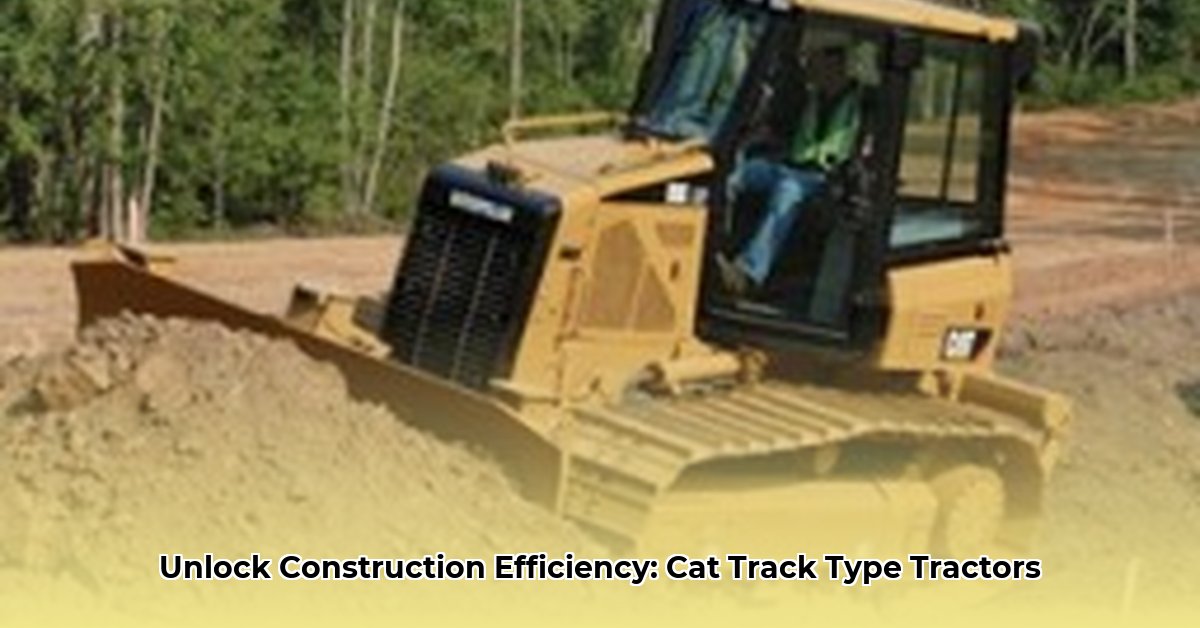
Choosing the right Cat track-type tractor is crucial for construction project success. This guide provides a step-by-step approach to selecting the ideal machine for your specific needs and budget, maximizing efficiency and minimizing downtime. For more information on tractor sizes, check out this helpful resource: Tractor Sizes Guide.
Understanding Your Needs: Project Assessment
Before exploring Cat track-type tractor models, a thorough project assessment is essential. This involves considering several key factors:
- Project Scale: Is this a small landscaping project or a large-scale earthmoving operation? This dictates the required machine size and power.
- Terrain Conditions: What type of soil will the tractor encounter? (e.g., loose topsoil, clay, rock). Steep slopes or uneven terrain demand specific undercarriage designs and higher horsepower.
- Soil Type: Different soil types require different blade types and machine weights for optimal performance. For example, loose sand requires a different approach than hard clay. Are there any obstacles?
- Budget: Setting a realistic budget early restricts options and ensures cost-effective decision-making. Remember to consider ongoing maintenance and fuel costs.
Answering these questions helps refine your search and prevents unnecessary expenditure on unsuitable machinery. What specific challenges does your project present?
Key Specifications & Features: Impact on Performance
Several key specifications directly influence a track-type tractor's effectiveness:
- Horsepower (HP): This indicates the machine's pushing power. Higher HP tackles larger loads and tougher terrain, but increases fuel consumption and purchase price. What horsepower is needed for your project's challenges?
- Blade Type and Size: Different blade types suit various tasks. U-blades are ideal for fine grading, while straight blades excel at heavy pushing. Larger blades move more material but reduce maneuverability. What blade type best suits your material handling needs?
- Operating Weight: This affects stability and traction. Heavier machines provide greater stability on slopes but are less maneuverable in confined spaces. How does weight impact your project site?
- Undercarriage Design: The design and width of the tracks impact ground pressure and traction. Wider tracks reduce ground pressure on soft ground, improving performance but potentially limiting maneuverability. What is the ideal track width for your project?
The following table summarizes these key specifications and their impact:
| Specification | Impact on Performance | Considerations |
|---|---|---|
| Horsepower (HP) | Pushing power, ability to handle tough terrain | Higher HP = more power, but increased fuel consumption and cost. |
| Blade Type & Size | Productivity, suitability for different tasks | U-blade for fine grading, straight blade for heavy pushing and material moving. |
| Operating Weight | Traction, stability, ground pressure | Heavier = better stability, but potentially less maneuverability. |
| Undercarriage Design | Durability, suitability for different terrains | Track width and design affect ground pressure and traction. |
Cat Track-Type Tractor Models: A Detailed Breakdown
Caterpillar offers various track-type tractors categorized by size and capability. While specific models change, the general categories remain consistent. Always consult the official Caterpillar website for the most up-to-date information.
- Small Models: Ideal for smaller projects, site preparation, and light landscaping. They're more fuel-efficient and maneuverable.
- Mid-Size Models: Versatile for a broader range of applications, balancing power and maneuverability. These are often a popular choice.
- Large Models: Built for heavy-duty work, large-scale excavation, and demanding projects. They're powerful but require more space.
Each model has specific specifications; careful review is essential for optimal selection. Does your project require the power of a large model or the efficiency of a small one?
Selecting the Right Model: A Decision-Making Flowchart
This flowchart guides you through the selection process:
- Define Budget: Set a realistic budget, considering initial cost, maintenance, and fuel.
- Identify Primary Tasks: What are the primary functions of the tractor on this project?
- Assess Terrain: Analyze soil type, slopes, and obstacles present on the project site.
- Review Cat Specifications: Compare model specifications to your project demands. Consider horsepower, blade type, operating weight, and undercarriage.
- Evaluate Dealer Support: Choose a dealer offering convenient access to parts and service.
This systematic approach ensures you choose equipment aligned with your project requirements.
Maintenance and Operation: Ensuring Long-Term Performance
Regular maintenance is crucial for maximizing lifespan and performance. This includes routine inspections, servicing based on Caterpillar's recommendations, and proper operator training. Preventive maintenance significantly reduces repair costs. Dr. Emily Carter, Professor of Mechanical Engineering at MIT, emphasizes the impact of proper maintenance on reducing equipment downtime. What is your maintenance strategy for maximizing equipment efficiency and reducing downtime?
Cost Considerations: Total Cost of Ownership (TCO)
The TCO extends beyond the initial purchase price. Fuel efficiency, maintenance, potential repairs, and operator training all contribute. Careful consideration of these factors is essential for long-term cost control. What is the long-term financial impact of your decision?
Conclusion: Optimizing Your Construction Investment
Choosing the appropriate Cat track-type tractor is critical for project success. By carefully assessing your needs, understanding key specifications, and following the steps outlined above, you can make an informed decision, optimizing your construction efficiency and return on investment. Contact your local Caterpillar dealer for expert advice and to explore available models.